


12 Oct ADVANCED AIR MOBILITY AT #BUXTONHEIGHTS
 From CN Tower to AI-Powered Aerial Rescue: Ivan Kristoff’s Journey Toward the Rescuer of the Future
 From CN Tower to AI-Powered Aerial Rescue: Ivan Kristoff’s Journey Toward the Rescuer of the Future
On September 11, 2026, a new chapter in my work toward the Rescuer of the Future was prepared at #BuxtonHeights in Sofia, Bulgaria. Marking the 25th anniversary of September 11, 2001, the initiative connected the lessons of high-rise emergency response with emerging technologies, including drones, artificial intelligence (AI), aerial monitoring and advanced rope-access techniques.
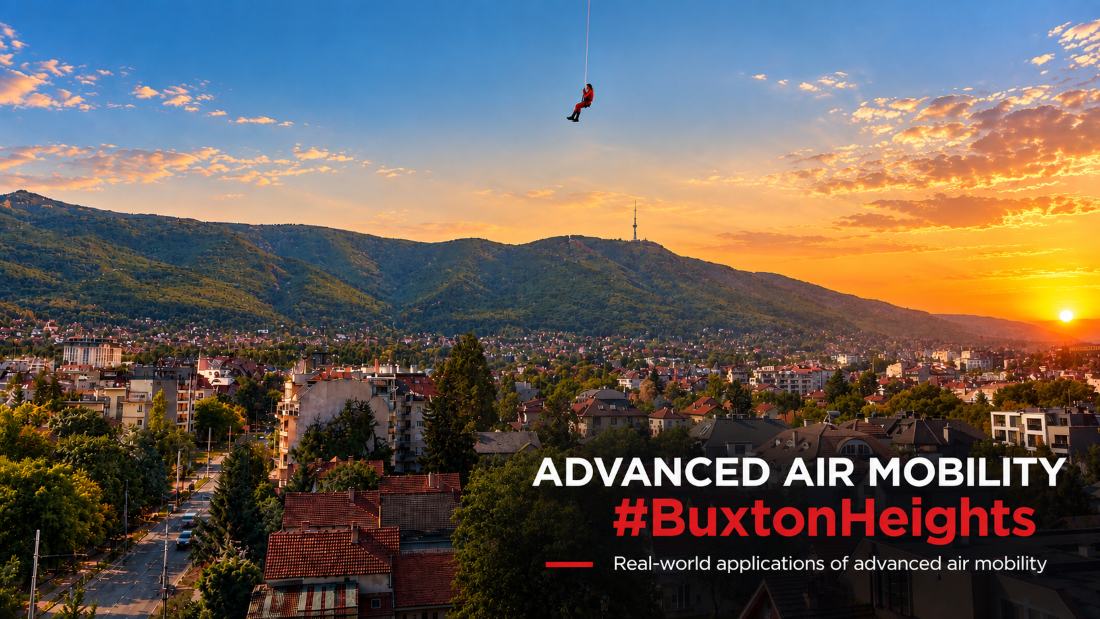
The project explored a new approach to aerial rescue: a human rescuer suspended from a drone. Drawing on my previous experience with helicopter-supported operations and work at extreme heights, I sought to demonstrate how new technologies could contribute to the future of emergency response. The demonstration may represent a world-first achievement in its specific configuration, pending independent verification and comparison with documented precedents.
The broader objective is to develop practical training concepts that bring together professional rescuers, volunteer teams, aviation specialists and technology partners. The vision is to help build a new generation of rescuers equipped to work safely and effectively in challenging environments.
 September 11, 2026: 25 Years of Lessons in Emergency Response
 September 11, 2026: 25 Years of Lessons in Emergency Response
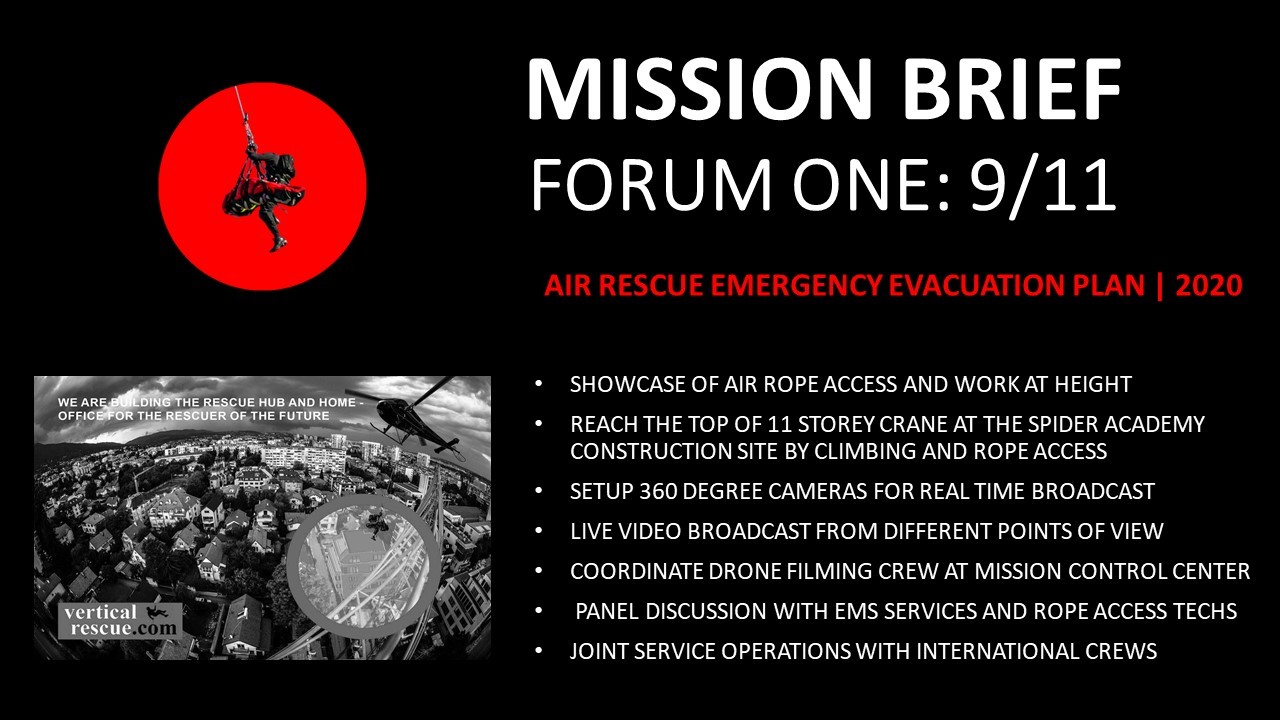
The 25th anniversary of September 11, 2001, provided an opportunity to reflect on the challenges faced by emergency responders in high-rise incidents and other complex environments. The events of that day highlighted the importance of preparedness, coordination, technical innovation and the ability to reach people in places that conventional response methods may struggle to access.
Years earlier, in connection with the 20th anniversary of 9/11, I discussed high-rise rescue and technical-response concepts involving representatives of the police, fire service and specialized counterterrorism personnel. That work helped shape the continuing vision behind AIR FIRE RESCUE and the development of new approaches to aerial and vertical access.
In 2026, the focus has expanded to include drone-based experimentation, AI-assisted analysis, real-time monitoring and the integration of aerial systems with established rescue techniques. These technologies do not replace trained emergency personnel or established safety procedures. Their value lies in supporting assessment, communication, planning and the development of new operational options.
From CN Tower to the Rescuer of the Future

My experience in extreme environments began long before today’s drone and AI technologies became widely available. At the turn of the millennium, the Y2K computer-date issue was a major concern, while work on high structures demanded specialized skills, careful planning and an understanding of the risks associated with height, weather, communications equipment and restricted access.
In 2003, I undertook high-altitude work associated with the antenna mast of Toronto’s CN Tower. The assignment required careful coordination, technical preparation and attention to the challenges of working in an exposed environment above the city and near Lake Ontario, where winter weather and strong winds can complicate operations.
The CN Tower project became an important part of my professional story because it brought together rope access, risk assessment, aviation support and practical problem-solving at an exceptional height. It also reinforced a principle that remains central to my work: difficult rescue and access challenges require more than courage. They demand preparation, reliable systems, teamwork and the ability to adapt technology to real operational needs.

High-Altitude Work, Rope Access and Operational Safety
Working at height requires a disciplined approach to safety. In the CN Tower project, access restrictions, communications equipment, environmental exposure and the risks associated with antenna installations all required careful consideration. Work had to follow the applicable procedures and the technical guidance established for the operation.
My approach combined rope-access experience, specialized equipment, communication tools and an emphasis on planning for unexpected conditions. The lessons from that period remain relevant today: every operation needs a clear objective, a risk assessment, competent personnel, appropriate equipment and a plan for responding if conditions change.
Modern tools can add new layers to this process. Drone imagery, thermal sensors where appropriate, digital mapping and AI-assisted analysis may help teams assess a scene, identify areas requiring closer inspection and improve situational awareness. However, such tools must be validated for their intended use, and decisions affecting life safety must remain under qualified human oversight.

From Helicopter-Supported Operations to Drone-Based Rescue
My experience with aerial operations includes work and training involving several helicopter types, including the Mi-17, Cougar, AS 352, Enstrom B-480 and Eurocopter AS 355, among others. My experience has included operations involving central and lateral external human-load suspension configurations, where applicable to the aircraft, equipment, mission and approved procedures.
Helicopter-supported rescue and drone-based aerial operations are not interchangeable. They differ in payload capacity, flight characteristics, endurance, operating limits, regulatory requirements and the level of human involvement. Nevertheless, experience gained around aviation, external-load operations, rope systems and work at height can inform the careful development of new rescue concepts.
On September 11, 2026, at the site of the Home-Office of the Rescuer of the Future in Sofia, we prepared a demonstration involving a human rescuer suspended from a drone. The initiative explored how a drone might support a controlled aerial movement of a person as part of a wider research and training concept.
This is an important distinction: the demonstration is a step in exploring a possible new application, not proof that a drone can replace a helicopter or serve as a universally suitable human-rescue platform. Any operational use would require appropriate aircraft and lifting-system specifications, a documented risk assessment, qualified personnel, regulatory authorization and independent validation.
Could This Be a World First?
The September 2026 demonstration was intended to explore a distinctive combination of drone technology and a suspended human rescuer. Based on the project’s current description, it may be a world-first achievement in its particular configuration. However, a definitive claim requires a clear description of the aircraft, lifting arrangement, purpose, location and date, supported by reliable records and independent comparison with previous demonstrations.
Documenting the process matters as much as the achievement itself. Video, photographs, technical records and a transparent account of the operating conditions can help experts evaluate what was accomplished and identify what should be tested next. The aim is not simply to make a dramatic image, but to contribute useful knowledge to the future of aerial rescue.
 #BuxtonHeights: A Test Site for the Rescuer of the Future
 #BuxtonHeights: A Test Site for the Rescuer of the Future
The Home-Office of the Rescuer of the Future at #BuxtonHeights in Sofia is being developed as a setting for experimentation, technical learning and the exploration of new rescue concepts.
The vision brings together vertical access, drone operations, aerial monitoring, emergency communications and practical training. Depending on the specific exercise, digital tools and AI-assisted systems could help organize visual information, support scenario planning, compare observations and improve the way teams document their findings.
AI is not a substitute for rescue expertise. Its role is to assist qualified people by helping them process information, prepare scenarios and identify questions that require human assessment. In a real emergency, reliable communications, trained responders, suitable equipment and sound operational decisions remain essential.
The longer-term ambition is to develop a modular training environment that can support cooperation between volunteer rescuers, fire-service personnel, technical specialists, aviation professionals and technology developers. With suitable partners and resources, some of these concepts could be adapted for other locations and high-rise environments, including cities in the Middle East.
 AIR FIRE RESCUE: Building a New Approach to Aerial Emergency Response
 AIR FIRE RESCUE: Building a New Approach to Aerial Emergency Response
The AIR FIRE RESCUE concept grew out of my interest in combining aviation, technical rescue and international cooperation. In 2010, I participated in an aviation and medical exhibition in the Middle East and had contact with representatives of Dubai’s rescue community, including an invitation connected with the rescue department of Dubai Police.
Those experiences strengthened my interest in learning from different emergency-response systems and exploring how specialist training could be developed in Bulgaria. The objective is to create opportunities for rescuers to exchange knowledge, test suitable technologies and train for difficult situations involving high-rise buildings, restricted access and complex aerial environments.
Today, the concept can also consider how drones, digital communications and AI-supported analysis may contribute to situational awareness and training. Each proposed application must be assessed individually: a technology that is useful for observation or simulation is not automatically suitable for carrying a person or performing an operational rescue.
International cooperation could help bring together equipment providers, researchers, emergency services and volunteer organizations to assess the practical value of these ideas. Any future training or operational partnership would need clearly defined responsibilities, appropriate authorizations and safety standards.
 International Vertical Access Network (I.V.A.N.)
 I
IMy broader vision includes the development of the International Vertical Access Network as a platform for cooperation around vertical access, aerial rescue and technical innovation. The concept is intended to connect people with practical experience to organizations and technology partners that can help develop training, research and new approaches to emergency response.
The digital side of this vision includes Spiderman.Academy, which can support the exploration of technology-assisted learning, simulations and new ways to introduce younger generations to aviation, engineering and rescue-related skills.
Future development could include AI-assisted training scenarios, drone-operation simulations, digital learning materials and structured exercises that help participants understand the importance of preparation, teamwork and responsible innovation. Such tools are intended to complement practical instruction, not replace hands-on training or professional qualifications.
The ambition is to help young people discover how science, engineering, aviation and teamwork can contribute to solving real-world problems—and to inspire the next generation of people who may one day become the rescuers of the future.
From Innovation to Practical Rescue
 From Innovation to Practical Rescue
My work has moved through several technological eras: from extreme rope-access projects and helicopter-supported operations to the emerging possibilities of drones, AI and connected monitoring systems. The equipment has changed, but the underlying challenge remains the same: how can we reach people in difficult situations while improving preparation, coordination and safety?
The September 11, 2026 initiative at #BuxtonHeights was one step in exploring that question. It connected the memory of the emergency responders who lost their lives on September 11, 2001, with a forward-looking effort to examine new technologies and develop practical rescue knowledge.
The next stage is to document the work, assess the technical and regulatory requirements, learn from qualified specialists and build partnerships that can turn promising concepts into responsible training projects. Innovation in rescue must be measured not only by what appears possible, but also by what can be demonstrated, verified, taught and performed safely.
The Rescuer of the Future is not defined by one piece of equipment. It is a person who combines experience, discipline, teamwork and a willingness to learn—with the ability to use technology responsibly when human lives are at stake.
For more information about the project and its development, visit AerialRescue.com